Introduction
VAT Registration Dubai is a mandatory step for most free zone businesses once taxable turnover crosses the legal threshold. This guide explains when a free zone company must complete VAT registration in Dubai, which zones receive special treatment, and how to apply through EmaraTax while avoiding unnecessary delays and penalties.
Most free zone companies in Dubai must register for VAT once their taxable supplies and imports cross AED 375,000 within a 12-month period, similar to mainland businesses. The exception applies to certain Designated Zones, where some supplies of goods may fall outside the scope of UAE VAT. However, services supplied from a free zone are generally subject to VAT, regardless of Designated Zone status.
What Is a Designated Zone Under UAE VAT Law?
Not every free zone in Dubai qualifies as a Designated Zone for VAT purposes. A Designated Zone is a specifically listed area with security controls and customs procedures that receives special treatment under certain UAE VAT rules relating to goods.
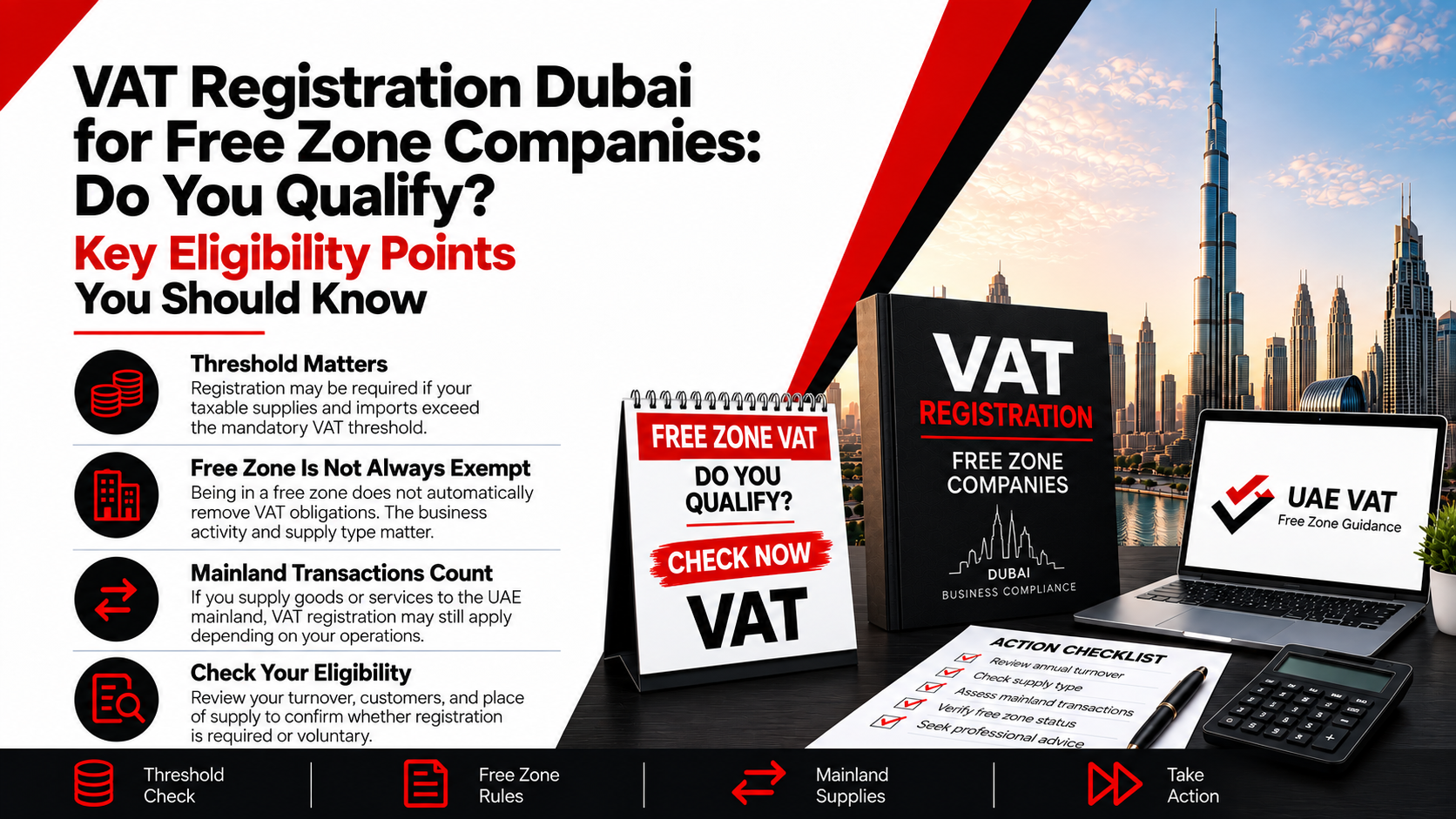
Being a free zone company does not automatically mean that your business is located in a Designated Zone. Even when a business operates from a Designated Zone, this does not automatically exempt the company from VAT registration in Dubai. Registration requirements are primarily determined by taxable turnover and the nature of supplies.
Do Free Zone Companies Need VAT Registration in Dubai?
Yes, in most cases. The Federal Tax Authority requires VAT registration when taxable supplies and imports exceed AED 375,000 over the previous 12 months, or when the business expects to exceed this threshold within the next 30 days. This requirement can apply to free zone entities, mainland LLCs, branches, and e-commerce businesses.
A business that has not reached the mandatory threshold but has taxable supplies, imports, or qualifying expenses exceeding AED 187,500 may be eligible for voluntary VAT registration. This can be useful for new free zone businesses that want to recover input VAT on eligible business expenses.
Free Zone VAT Registration Checklist
✓ Trade license copy issued by the relevant free zone authority
✓ Memorandum and Articles of Association or equivalent constitutional documents
✓ Passport and Emirates ID copies of shareholders and managers, where applicable
✓ Details of business activities and expected taxable turnover
✓ Bank account details or bank letter in the company name
✓ Office lease agreement, tenancy contract, or flexi desk agreement, where applicable
✓ Customs registration number, if the company imports or exports goods
Free Zone vs Mainland: Key VAT Differences
| Aspect | Free Zone Company | Mainland Company |
|---|---|---|
| VAT registration threshold | AED 375,000 mandatory, AED 187,500 voluntary | AED 375,000 mandatory, AED 187,500 voluntary |
| Designated Zone benefit | Some supplies of goods may receive special VAT treatment | Not applicable |
| Sales to UAE mainland | Standard rated at 5% in most cases | Standard rated at 5% |
| TRN requirement | Required once mandatory registration conditions are met | Required once mandatory registration conditions are met |
Step-by-Step Process to Register on EmaraTax
1. Create or log in to your EmaraTax account using your registered details.
2. Add or select the taxable person profile for your free zone company.
3. Complete the VAT registration application with your trade license, business activity, and turnover details.
4. Upload the required supporting documents and financial information.
5. Submit the application and monitor its status through the EmaraTax portal.
6. Receive your Tax Registration Number (TRN) once the application is approved.
Common Mistakes Free Zone Owners Make
✓ Assuming that free zone status means automatic VAT exemption
✓ Registering late after becoming liable for VAT registration
✓ Confusing Designated Zone rules for goods with the VAT treatment of services
✓ Failing to track taxable turnover accurately across related businesses where applicable
✓ Submitting incomplete trade license, lease, financial, or other supporting documents through EmaraTax
Final Thoughts
Free zone status in Dubai does not automatically remove the obligation to register for VAT. What matters is the business's taxable turnover, the nature of its supplies, and whether the specific free zone is officially classified as a Designated Zone for VAT purposes.
Business owners should confirm their zone status, monitor taxable turnover regularly, and prepare the required documents before the registration deadline. Taking action early can help avoid application delays and potential VAT compliance penalties.
Need help checking your free zone VAT status or completing EmaraTax registration? Speak with a qualified tax consultant in Dubai to understand your registration obligations and complete the process correctly.
Frequently Asked Questions
Is every free zone in Dubai a Designated Zone?
No. Only specific zones that meet the Federal Tax Authority's requirements and are officially listed as Designated Zones qualify for the special VAT treatment. Most free zone companies are subject to the standard VAT rules applicable to their supplies.
Do free zone companies charge VAT on exports?
Exports of goods outside the UAE are generally subject to 0% VAT when the applicable conditions and export evidence requirements are met. Businesses should maintain the required documentation to support zero-rated export transactions.
Can a free zone company recover VAT on expenses?
Yes. Once VAT registered, a free zone company can generally recover input VAT on qualifying business expenses, subject to the UAE VAT recovery rules and proper supporting tax invoices.
What happens if a free zone company registers late?
Late VAT registration can result in administrative penalties and additional compliance requirements. Businesses should monitor their taxable turnover and apply within the applicable registration timeframe once they become required to register.